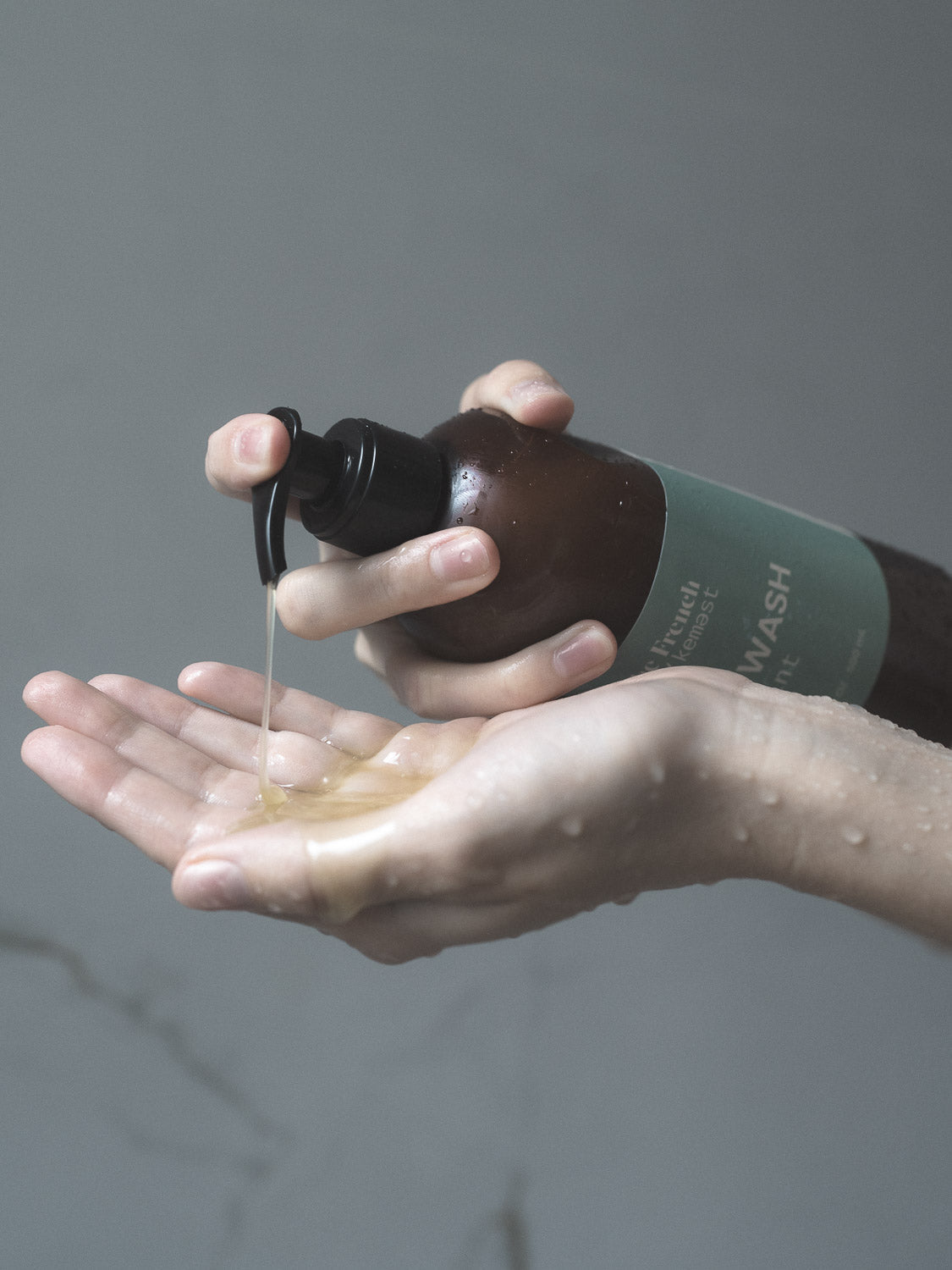
Glycerin is one of the few ingredients that appears in drugstore lotion, luxury serum, and traditional soap alike, and it earns its place everywhere for the same reason: it is one of the most effective and best-studied moisture-binding ingredients in existence.
It is also, and this is the part most labels never explain, a substance your soap created itself. Understanding that connection tells you more about how a soap was made than almost anything else on the package.
What glycerin is
Glycerin, also written glycerol or glycerine, is a simple molecule: a small sugar alcohol, colorless, odorless, with a faintly sweet taste and a syrupy texture. On INCI ingredient lists it appears simply as glycerin.
Its defining property is that it is a humectant: it attracts water and holds onto it. Applied to skin, glycerin draws moisture into the outer layer and slows its evaporation, which is why it is a backbone ingredient of moisturizers. Decades of dermatological literature support it, and the Cosmetic Ingredient Review, the independent panel that assesses cosmetic ingredient safety in the United States, has concluded glycerin is safe as used in cosmetics. It is about as uncontroversial as an ingredient can be.
Commercial glycerin can come from vegetable oils, animal fats, or synthesis. The glycerin associated with our products is vegetable, for a structural reason that comes next.
Where soap's glycerin comes from
Soap is made by saponification: an oil reacts with an alkali, and the oil's triglycerides split into two products. The fatty acid salts, which are the soap itself, and glycerin, freed from the backbone of the oil molecules. Roughly a tenth of the output of the reaction, by weight, is glycerin.
So true soap does not need glycerin added; it is born containing it. Every traditionally made bar and every genuine liquid soap carries the glycerin of its own reaction, which softens the character of an otherwise alkaline cleanser: the soap lifts oils from skin while its glycerin holds water at the surface.
Why industrial soap often removes it
Here is where process becomes visible on the label. Glycerin is a valuable commodity, used in food, pharmaceuticals, and cosmetics. In large-scale soap manufacturing, the soap mass is typically washed with brine, which separates the glycerin so it can be extracted and sold separately. The soap that remains is harder, longer-lasting on the production line, and noticeably more stripping on skin, which is one reason some bar soaps leave skin tight while others do not.
Some of that extracted glycerin is later sold back into cosmetics, occasionally into moisturizers marketed to people whose soap dried out their skin. There is no scandal in this, it is simply industrial economics, but it explains a real difference between products that look identical. Cold process and small-kettle soapmaking never perform the separation: the glycerin stays where the reaction put it.
This gives you a genuinely useful label-reading trick. On a true soap, glycerin listed among the ingredients means it is present, whether retained from the reaction or added back. Combined with the maker's description of their process, it tells you whether you are holding a whole soap or a rebuilt one.
Glycerin in our formulas
Our soaps and body washes are made by saponification in small kettles, and the glycerin of the reaction stays in the product. In the body washes, glycerin also appears explicitly on the label, reinforcing the humectant side of the formula. Skin is cleaned by the soap and, in the same gesture, offered the moisture-binding molecule that soap production naturally creates. It is a small example of the principle behind every formula we make: before adding an ingredient, check whether the chemistry has already provided it.
FAQ
What does glycerin do for skin?
It is a humectant: it attracts water into the outer layer of skin and slows its loss. That makes cleansers milder and moisturizers work, which is why it appears across both categories.
Is glycerin safe?
Yes, by broad scientific consensus. The Cosmetic Ingredient Review has assessed glycerin as safe as used in cosmetics, and it has decades of use in food and pharmaceuticals behind it.
Is glycerin natural or synthetic?
It can be either. Glycerin is produced naturally whenever oils are saponified into soap, and vegetable glycerin from oils like sunflower, olive, or coconut is standard in personal care. Synthetic glycerin exists but is uncommon in cosmetics.
Why is glycerin removed from some soaps?
Because it is a valuable raw material. Industrial soapmaking commonly separates the glycerin with brine and sells it, leaving a harder, more stripping bar. Traditional and cold process methods keep it in the soap.
Is glycerin vegan?
It depends on the source. Glycerin from vegetable oils is vegan; glycerin from tallow is not. Labels rarely specify, so brands committed to vegetable sources generally say so, as we do.
Sources
- Cosmetic Ingredient Review, "Safety Assessment of Glycerin as Used in Cosmetics" (2019)
- Dermatological literature on humectants and stratum corneum hydration (e.g., Fluhr JW et al. on glycerin and skin barrier, British Journal of Dermatology)
- American Cleaning Institute, "Soaps and Detergents: Chemistry" (cleaninginstitute.org)


