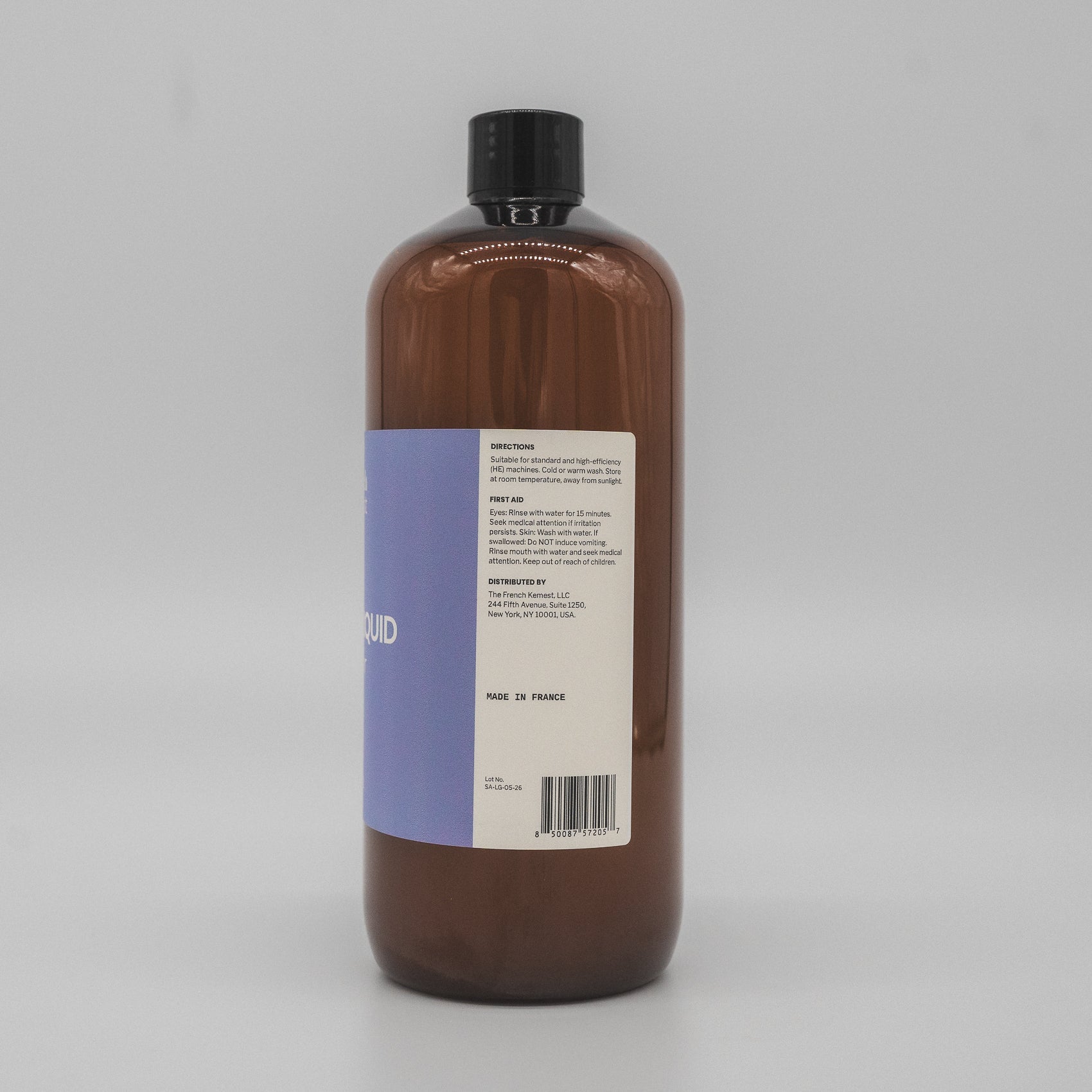
Most laundry detergent labels are hard to read for a simple reason: in the United States, cleaning products are not required to list every ingredient on the package the way cosmetics are. Some brands disclose everything voluntarily. Others list a few categories and stop there. California's Cleaning Product Right to Know Act has pushed the industry toward more online disclosure, but the bottle in your hand may still tell you very little.
This guide explains the main families of ingredients you will find in a laundry detergent, what each one does, and how to judge a formula on its own merits. Not with fear, and not with chemistry-sounding words used as a scare tactic. Just what the ingredients are and why they are there.
Why detergent labels look the way they do
A detergent is a functional product. Every ingredient in a well-made formula has a job: cleaning, softening the water, keeping the liquid stable, or adding scent. When you understand the jobs, the label stops being a wall of unfamiliar words and becomes a short list of decisions the manufacturer made.
One principle before we start. A long ingredient list is not automatically bad, and a short one is not automatically good. A short list tells you the manufacturer chose to solve the cleaning problem with fewer tools. Whether that trade-off suits you depends on your laundry, your water, and your preferences.
Surfactants: the ingredients that actually clean
Surfactants are the heart of every detergent. The word is short for surface-active agents. One end of a surfactant molecule bonds with water, the other bonds with oil and grease. This lets wash water grab onto oily soil, lift it off fabric, and carry it away in the rinse.
On labels, surfactants appear under many names. A few common ones:
- Sodium lauryl sulfate and sodium laureth sulfate, widely used synthetic surfactants
- Alkyl polyglucosides, surfactants made from sugars and fatty alcohols
- Laureth-7 or similar ethoxylated alcohols
- Potassium sunflowerate, potassium olivate, potassium cocoate: soaps, meaning surfactants made by reacting a vegetable oil with an alkali
That last group matters for understanding a brand like ours. Soap is the original surfactant. It has been cleaning clothes for centuries, long before synthetic surfactants were invented in the twentieth century. Synthetic surfactants were developed partly because they perform more consistently in hard water. Soap-based formulas answer that problem differently, usually by pairing the soap with a water softener. Which brings us to builders.
Builders and water softeners
If surfactants are the cleaners, builders are their support crew. Hard water contains dissolved calcium and magnesium. These minerals react with surfactants, especially soap, and reduce their cleaning power. Builders capture or neutralize those minerals so the surfactant can do its job.
Common builders include:
- Sodium carbonate, also called washing soda or soda ash. A mineral alkali that softens water and raises the pH of the wash, which helps loosen many everyday soils.
- Sodium citrate, a salt of citric acid that binds minerals.
- Zeolites, mineral structures used mostly in powder detergents.
Sodium carbonate is a good example of an ingredient with an intimidating name and a very plain identity. It is closely related to baking soda and has been used in laundry for generations.
Enzymes: targeted stain removers
Enzymes are proteins that break down specific types of stains. Proteases work on protein stains such as blood, egg, and sweat. Amylases work on starches. Lipases work on fats. Cellulases smooth cotton fibers.
Enzymes are effective, and they are one honest reason mainstream detergents perform well on difficult stains at low temperatures. A formula without enzymes, including ours, relies on the surfactant, the builder, and sensible washing habits instead: treating stains promptly, using warm water when the fabric allows it, and not overloading the machine. For everyday laundry this works well. For a household that regularly deals with heavy protein stains, an enzyme detergent or a targeted stain pre-treatment has a legitimate place. Both things can be true.
Fragrance
The word fragrance or parfum on a label can represent a single ingredient or a blend of dozens. Manufacturers are not required to disclose the individual components of a fragrance blend, which is why the word carries so much ambiguity.
Some detergents are scented with essential oils instead of synthetic fragrance blends. Essential oils are not automatically gentler. They are complex natural mixtures, and some of their naturally occurring components, such as linalool and limonene, are recognized fragrance allergens that must be labeled individually in the European Union above certain concentrations. A transparent brand will tell you which oils it uses and name those components rather than hiding behind a single word.
If anyone in your household has reactive skin, or if you are washing for a baby, a fragrance-free formula removes the question entirely. Fragrance-free means no fragrance materials of any kind, including essential oils.
Preservatives and stabilizers
Any product that contains water needs protection against microbial growth, or a formulation that makes growth unlikely. Conventional liquid detergents typically use preservatives such as methylisothiazolinone or benzisothiazolinone. These are effective in tiny amounts, and they are also documented skin sensitizers for some people, which is why they attract attention.
There is another route. A soap-based detergent with a sufficiently high pH is an environment where microbes struggle to grow, which can make added preservatives unnecessary. This is one of the quiet structural advantages of a traditional soap formula: the chemistry that cleans is also the chemistry that keeps the product stable.
Optical brighteners, dyes, and everything cosmetic
Optical brighteners are molecules that cling to fabric and convert invisible ultraviolet light into visible blue light. They make whites look whiter. They do not make anything cleaner. Dyes give the detergent itself an appealing color and do nothing for your clothes. Both are purely cosmetic ingredients, and both remain on fabric after washing, which is why sensitive-skin formulas usually leave them out.
Neither is a villain. They are simply a useful test of a brand's philosophy. A manufacturer that includes them has decided the appearance of the product and the perceived whiteness of your laundry are worth adding ingredients that touch your skin all day. A manufacturer that leaves them out has decided they are not.
The words that are not ingredients
Half of what you read on a detergent bottle is not the ingredient list but the vocabulary around it, and some of that vocabulary carries far less meaning than it appears to.
Natural and plant-based have no binding legal definition for cleaning products in the United States. A detergent can be called plant-based if some of its surfactants derive from plant feedstocks, even when the rest of the formula is conventional. The terms are not lies, but they are starting points for reading the label, never substitutes for it.
Free and clear generally signals the absence of fragrance and dye, which is genuinely useful information for sensitive households. It says nothing about what the formula does contain, and free-and-clear products routinely include brighteners and preservatives. Check both halves: what is absent and what is present.
Hypoallergenic is a claim without a standardized test behind it in US law. It expresses an intention, sometimes backed by real testing, sometimes not. A person managing a specific allergy is better served by a full ingredient list than by the word.
Dermatologist tested tells you a dermatologist was involved in some form of testing. It does not tell you what was tested, on whom, or what the results were. Treat it as neutral.
None of this vocabulary is scandalous. It is simply marketing operating in the space that incomplete disclosure leaves open. The more completely a brand publishes its ingredients, the less work these words have to do, which is itself a signal worth noticing.
A note on pH
Detergents are alkaline on purpose. A wash pH above neutral helps fibers release oily and acidic soils, which is why builders like sodium carbonate raise it deliberately. Soap-based formulas are naturally alkaline; many synthetic formulas are buffered to similar levels. This alkalinity belongs in the machine, not on your skin, which is one more reason thorough rinsing and correct dosing matter more than any single ingredient on the label. Fabric that is properly rinsed carries no meaningful pH story; fabric loaded with residue carries whatever the formula was.
Reading a real label: a four-ingredient example
Here is the complete ingredient list of our Baby Care laundry liquid:
Water, Potassium Sunflowerate, Sodium Carbonate, Sodium Chloride.
Read with the framework above, the label decodes in seconds. Water is the carrier. Potassium sunflowerate is the surfactant, a liquid soap made from sunflower oil. Sodium carbonate is the builder that softens the water and supports the soap. Sodium chloride is ordinary salt, used to adjust the thickness of the liquid.
One cleaner, one helper, one texture adjuster, and water. No fragrance, no dye, no brightener, no preservative. This is not the only valid way to make a detergent. It is one deliberate way, and the label lets you verify every part of the decision.
How to judge any detergent in five questions
When you pick up a bottle, ask:
- Can I find the full ingredient list, on the package or online? A brand that discloses everything is making a different promise than one that does not.
- What is the surfactant? Soap-based, plant-derived synthetic, or petroleum-derived synthetic. None of these words alone settles the question, but the answer tells you what kind of formula you are holding.
- Is there fragrance, and is it disclosed in detail? Fragrance is the most common source of skin reactions to laundry products.
- Are there brighteners or dyes? Cosmetic ingredients that stay on fabric.
- Does the formula match my actual laundry? Everyday clothes, baby textiles, and sports gear covered in protein stains are different problems.
The short version
A detergent label is a list of jobs: clean, soften water, remove specific stains, add scent, stay shelf-stable, look appealing. Every manufacturer decides which jobs matter and which tools to use. Once you can name the jobs, you can read any label in under a minute, and you can choose a formula because you understand it rather than because the packaging told you to trust it.
FAQ
What ingredients should I look for in a laundry detergent?
Start with the surfactant, since it does the actual cleaning, then check for a full ingredient disclosure. Whether you want fragrance, enzymes, brighteners, or dyes depends on your household. There is no single correct list, only formulas whose choices you can verify and agree with.
Are chemical-sounding names a bad sign?
No. Every substance has a technical name, including water and salt (sodium chloride). Sodium carbonate sounds industrial and is a simple mineral used in laundry for generations. Judge ingredients by their function and their track record, not by how their names sound.
Why do some detergents have such short ingredient lists?
Usually because they are soap-based. A soap plus a water softener can handle everyday laundry without enzymes, preservatives, or cosmetic additives. The trade-off is that such formulas skip targeted stain enzymes, so stubborn protein stains may need pre-treatment.
Is fragrance in laundry detergent bad for skin?
Fragrance is the most frequently cited cause of skin reactions to laundry products, but most people tolerate it without any issue. If someone in your household has reactive skin, fragrance-free is the simplest answer because it removes the variable entirely.
What is the difference between soap-based and synthetic detergent?
Soap-based detergents use saponified vegetable oils, such as potassium sunflowerate, as their surfactant, typically paired with a water softener. Synthetic detergents use surfactants manufactured from plant or petroleum feedstocks, which perform more consistently in hard water and allow more complex formulas. Both clean laundry; they represent different sets of trade-offs, visible on the label once you know the surfactant names.
Do laundry detergents have to list all their ingredients?
Not on the package under US federal law, although cosmetics do. California's Right to Know Act requires detailed disclosure online for products sold there, and many brands now publish full lists voluntarily. If you cannot find a complete list anywhere, that absence is itself information.
Sources
- American Cleaning Institute, "Soaps and Detergents: Chemistry" (cleaninginstitute.org)
- California Cleaning Product Right to Know Act of 2017 (SB-258), California Legislative Information
- US FDA, "Fragrances in Cosmetics" (fda.gov), on fragrance disclosure principles
- EU Regulation (EC) No 1223/2009, Annex III, labeling of fragrance allergens including linalool and limonene
- US EPA, Safer Choice Program, criteria for cleaning product ingredients (epa.gov/saferchoice)


